The Electromagnetic Spectrum (Radiofrequency Spectrum)
Understanding radio frequencies to successfully bring your equipment to market
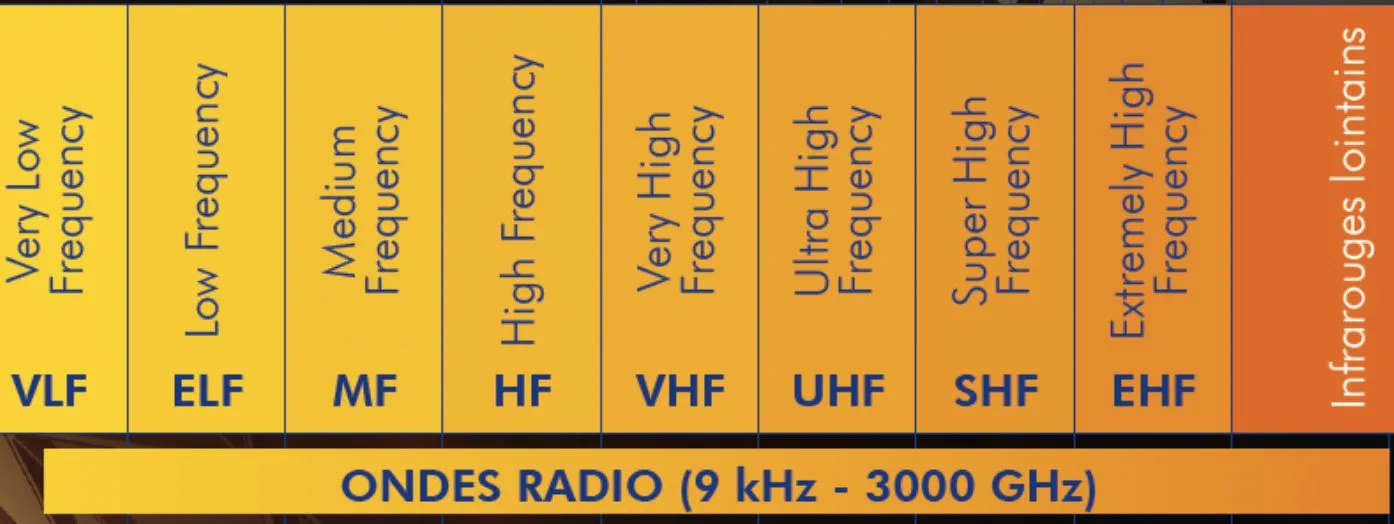
The electromagnetic spectrum covers the full range of electromagnetic radiation, from radio waves to gamma rays. For manufacturers of electrical, electronic and radio equipment, the most relevant part is the radio spectrum: each frequency band corresponds to specific uses, electromagnetic environment constraints and compliance requirements ahead of market placement.
What is the electromagnetic spectrum?
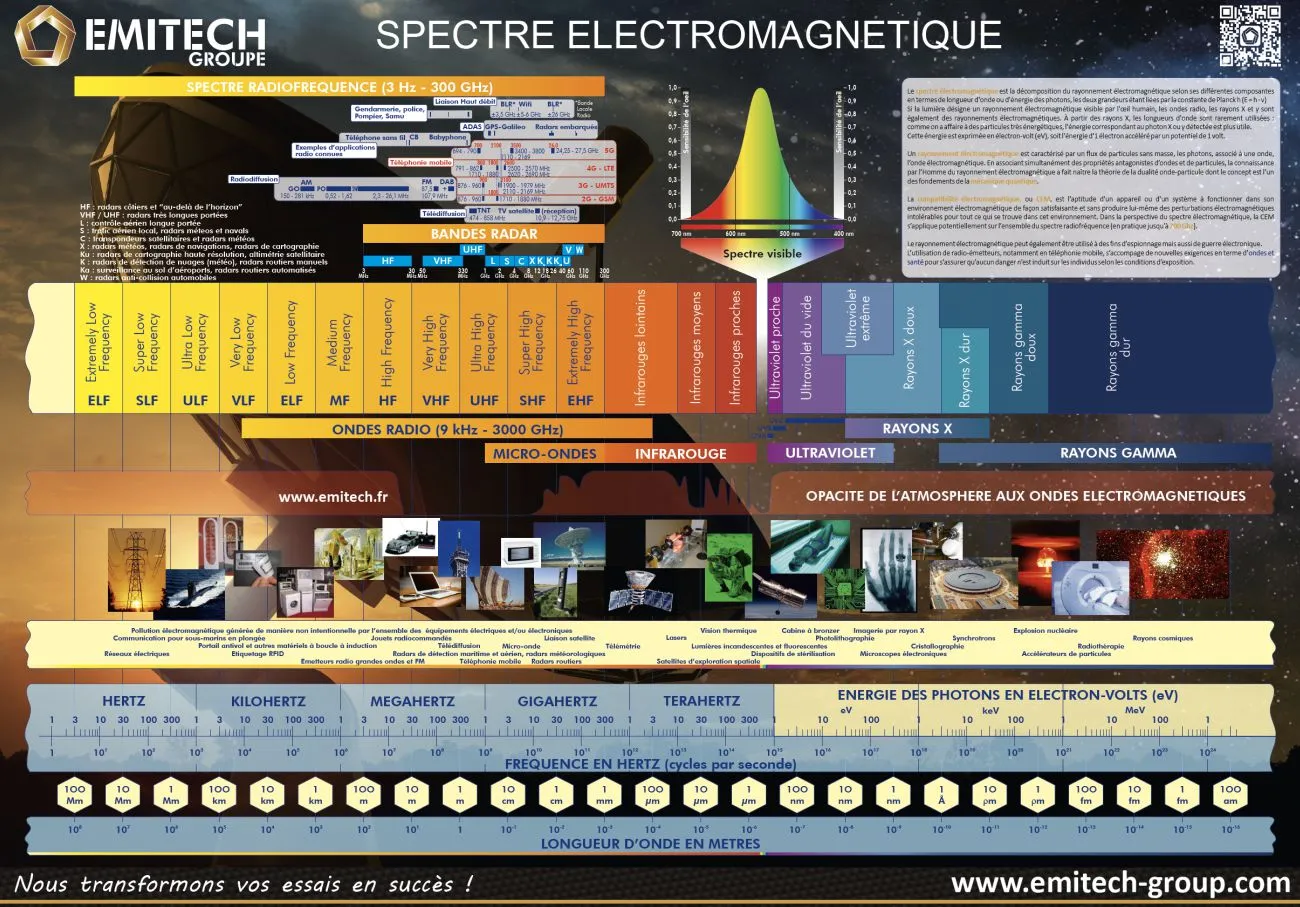
The electromagnetic spectrum is the classification of all electromagnetic radiation — from radio waves to gamma rays — according to frequency or wavelength. The higher the frequency, the higher the energy carried.
- The part relevant to most electrical, electronic and connected equipment falls within the radio spectrum, generally defined from 30 Hz to 300 GHz under European reference frameworks. Some international classifications extend this range down to frequencies as low as 3 Hz.
- Beyond that lie infrared, visible light, ultraviolet, then X-rays and gamma rays.
How is the radio spectrum divided up?
| Band | Frequency range | Example applications |
|---|---|---|
| ELF – Extremely Low Frequency | 3 Hz – 30 Hz | Communication with submerged submarines |
| SLF – Super Low Frequency | 30 Hz – 300 Hz | Electrical power distribution (50/60 Hz) |
| ULF – Ultra Low Frequency | 300 Hz – 3 kHz | Mine communications, scientific applications |
| VLF – Very Low Frequency | 3 – 30 kHz | Maritime navigation, beacons, submarine communications |
| LF – Low Frequency | 30 – 300 kHz | Long-wave (LW) broadcasting, low-frequency RFID tagging, anti-theft gates |
| MF – Medium Frequency | 300 kHz – 3 MHz | AM / medium-wave (MW) broadcasting |
| HF – High Frequency | 3 – 30 MHz | Shortwave broadcasting, CB radio, amateur radio, long-range coastal radar |
| VHF – Very High Frequency | 30 – 300 MHz | FM broadcasting, terrestrial TV (lower part), long-range radar |
| UHF – Ultra High Frequency | 300 MHz – 3 GHz | 2G/3G/4G mobile telephony, Wi-Fi, Bluetooth, GNSS/GPS/Galileo, terrestrial TV, aviation and maritime radar |
| SHF – Super High Frequency | 3 – 30 GHz | 5G FR2 band (from 24 GHz), Wi-Fi 6E/7, weather and mapping radar, satellite links |
| EHF – Extremely High Frequency | 30 – 300 GHz | Automotive collision-avoidance radar, airport security radar, future very-high-speed links |
Key takeaways
- The electromagnetic spectrum spans frequencies from a few hertz to several hundred gigahertz.
- Each frequency band corresponds to specific uses: power, telecommunications, radar, satellite…
- Electrical and radio equipment must meet regulatory requirements before being placed on the market.
- EMC and radio testing verify this compliance (emission, immunity, EMF exposure).
- The frequency band used determines which regulations apply (EMC, RED, FCC, sector-specific approval).
- The Emitech Group supports manufacturers through all these steps, from the initial regulatory diagnosis to CE marking.
Frequency bands and their industrial applications
Power grids & RFID tagging (SLF/LF bands)
- 50/60 Hz power distribution and associated conducted disturbances.
- Low-frequency RFID tags and anti-theft gates.
- Electromagnetic compatibility (EMC) testing per the EN 61000 standards.
Wi-Fi, Bluetooth & connected devices (UHF band)
- Wi-Fi (2.4 / 5 / 6 GHz) and Bluetooth (2.4 GHz ISM band).
- Industrial and consumer connected devices (IoT).
- RF performance and coexistence testing.
2G/3G/4G/5G mobile telephony (UHF/SHF bands)
- 700 to 2,600 MHz bands (4G) and 3.4-3.8 GHz / 24.25-27.5 GHz bands (5G).
- Radio certification under the RED Directive 2014/53/EU.
- Emission, immunity and cybersecurity testing of radio modules.
Talk to our experts about the spectrum and its regulations
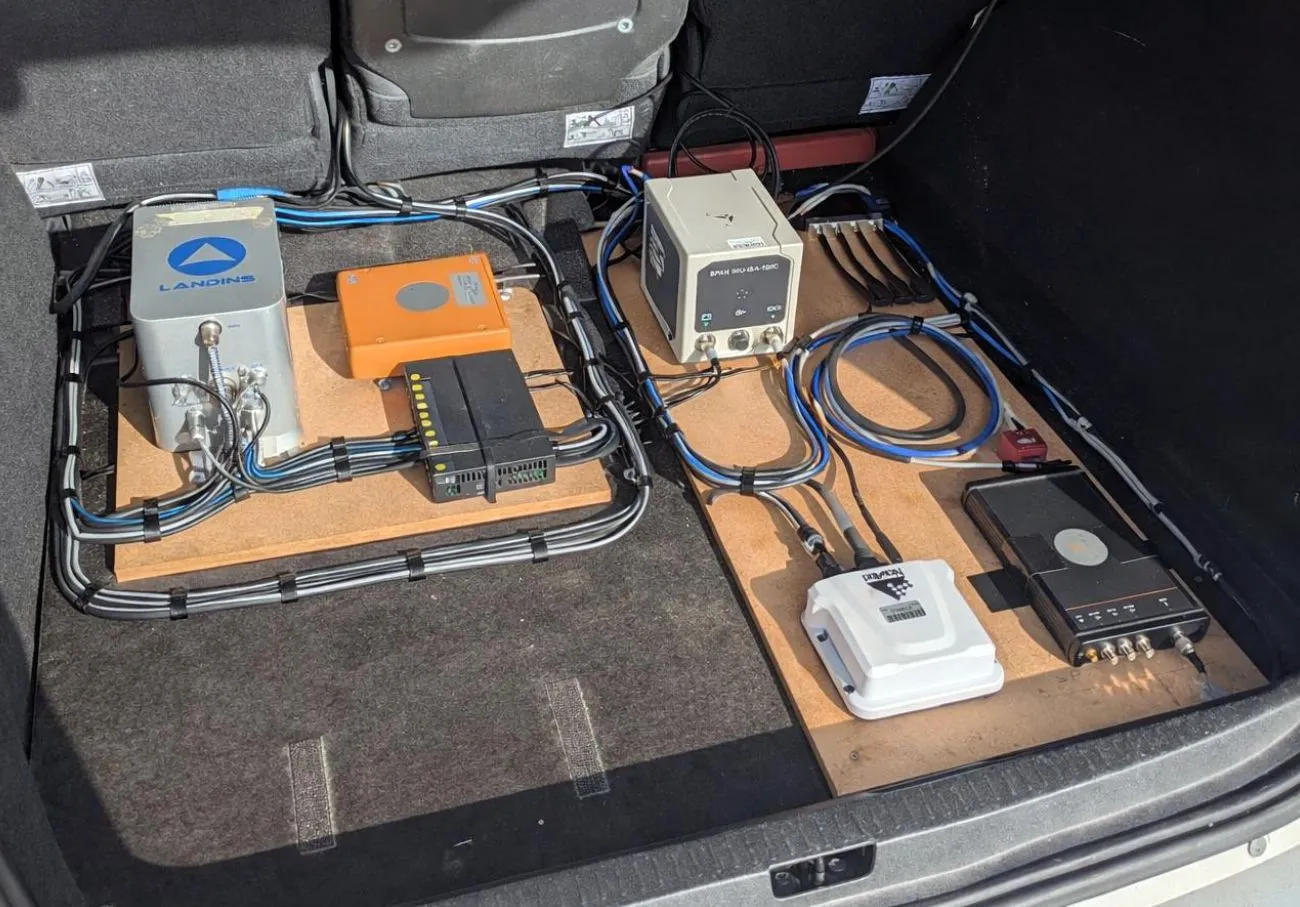
GNSS, GPS & Galileo (UHF band)
- Validation of the accuracy, integrity and robustness of geolocation systems.
- Resilience testing against interference, jamming and spoofing.
- Compliance with the EN 16803 standard.
Automotive — ADAS & onboard radar (EHF band)
- Collision-avoidance and driver-assistance radar (76-81 GHz band).
- Vehicle EMC type approval under UN Regulation No. 10.
- Combined EMC, vibration and climatic testing.
Why does the spectrum matter for placing your equipment on the market?
Before it can be placed on the market, any electrical, electronic or radio equipment must demonstrate that it uses the electromagnetic spectrum in compliance with the regulatory requirements applicable to its target market.
EMC Directive 2014/30/EU
Controls electromagnetic emissions and immunity to interference for all electrical or electronic equipment.
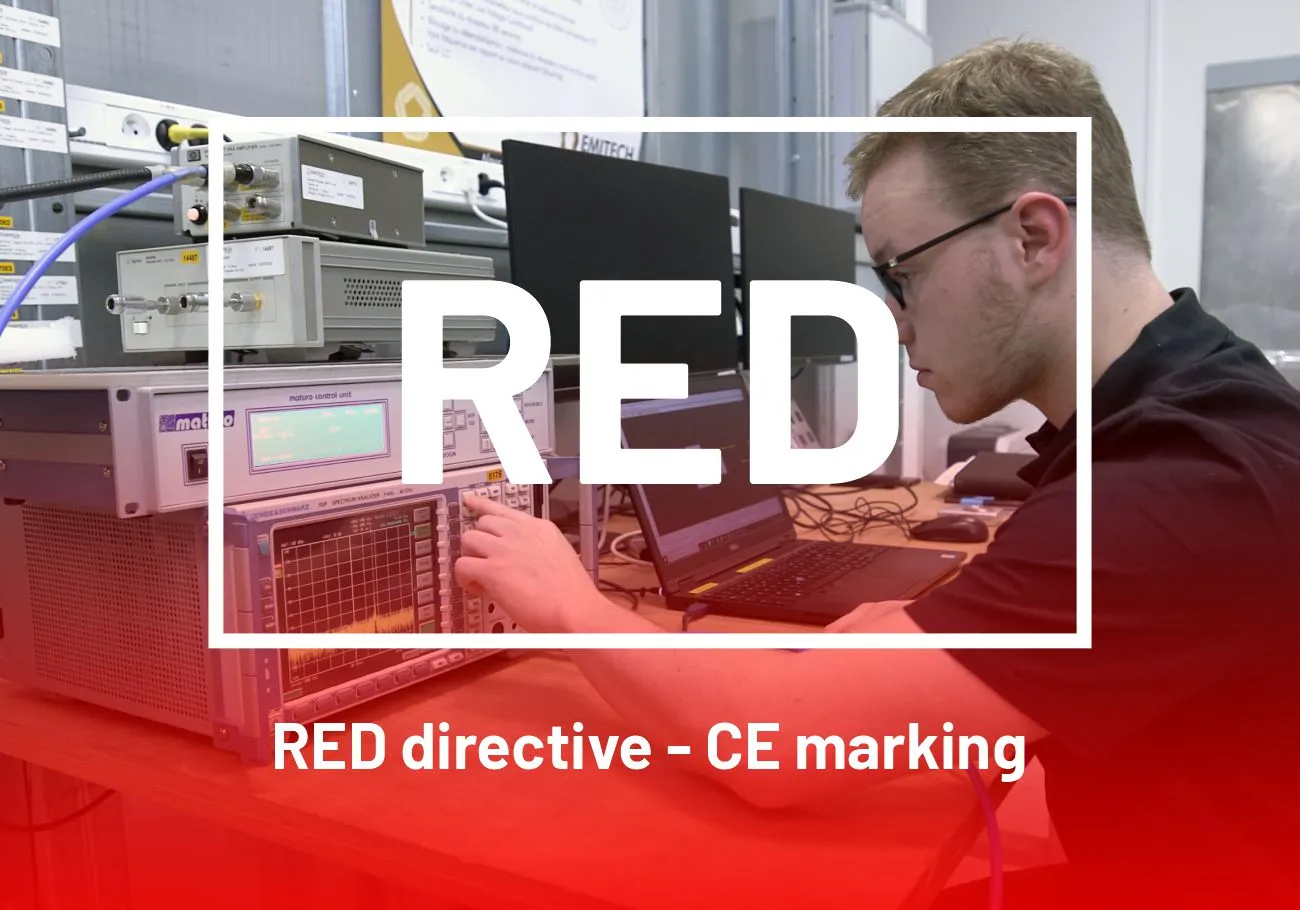
RED Directive 2014/53/EU
Covers radio equipment featuring Wi-Fi, Bluetooth, GNSS, 4G/5G or active RFID functions, with requirements on effective spectrum use, electromagnetic compatibility and, for relevant equipment, cybersecurity.
FCC / ISED — North American market
Specific requirements from the United States (FCC) and Canada (ISED) for any radio equipment exported to these markets.
Automotive & aerospace type approval
UN Regulation No. 10 for vehicles and ESAs, DO-160 and MIL-STD/STANAG standards for aerospace and defence.
FAQ — The electromagnetic spectrum
A radio wave is a specific type of electromagnetic wave, located in the lower part of the spectrum (up to around 300 GHz). All radio waves are electromagnetic waves, but the reverse isn't true: visible light, infrared and X-rays are other examples of electromagnetic waves.
It is the number of oscillations per second of an electromagnetic wave within the radio spectrum (3 Hz to 300 GHz), expressed in hertz (Hz). The higher the frequency, the shorter the wavelength.
A megahertz (MHz) equals one million cycles per second, a gigahertz (GHz) equals one billion. 1 GHz = 1,000 MHz. 4G uses frequencies expressed in MHz (700 to 2,600 MHz), while 5G also uses bands expressed in GHz (24.25 to 27.5 GHz).
Lower frequencies (FR1 band, roughly 700 MHz to 3.8 GHz) offer better range and building penetration, while higher frequencies (FR2 band, from 24 GHz) enable much higher data rates over short distances. Combining both optimises coverage and performance.
Yes. Wi-Fi mainly operates in the 2.4 GHz, 5 GHz and, for Wi-Fi 6E/7, 6 GHz bands — all of which fall within the radio spectrum (UHF/SHF band).
Bluetooth operates in the 2.4 GHz ISM band, a band shared with Wi-Fi and many connected devices, which drives coexistence requirements during radio testing.
Microwaves generally cover the range from 300 MHz to 300 GHz, which largely overlaps with the UHF, SHF and EHF bands of the radio spectrum.
Testing generally covers emission (power, spectral occupancy), reception, electromagnetic immunity, EMF exposure and, where applicable, the cybersecurity of wireless modules — under the RED Directive, FCC or ISED requirements.
European Directive 2014/53/EU (RED) covers any equipment with a radio function — Wi-Fi, Bluetooth, GNSS, 4G/5G, active RFID… It sets requirements for effective spectrum use, electromagnetic compatibility and, since 2025, cybersecurity.
This depends on the frequency band used, the target market (EU, US, Canada…) and the application sector (consumer, automotive, medical, defence…). Our experts carry out a regulatory diagnosis to identify the testing and certification scope you need.
Why choose the Emitech Group for your EMC and radio testing?
- Full-scope expertise in EMC, radio frequency, GNSS and cybersecurity testing.
- Accredited laboratories for reliable, standards-compliant testing.
- Notified body (NB 0536) for the RED and EMC directives.
- End-to-end support: from the initial regulatory diagnosis through to market placement.
- Proactive regulatory watch on developments affecting the spectrum and related directives.
- Ability to support your regulatory processes for export markets.
Related Services






Needs
Discover a selection of additional resources that explore topics related to this page including regulatory contexts, technical articles, and specific areas of expertise. These materials provide further insight to help you better understand the key challenges and available solutions.


Need a regulatory diagnosis?
Developing radio equipment and need to identify the tests and certifications required to bring it to market? Contact our experts for personalised support.