
Windmilling tests
Greater safety for aeronautical equipment
Why carry out windmilling tests?
- Assess the vibrations induced in the event of a component failure.
- Validate the strength of equipment structures subjected to high-amplitude, low-frequency vibrations.
- Identify potential mechanical weaknesses under conditions of free rotation.
- Optimise the safety and reliability of aircraft
Our windmilling testing services
We offer solutions tailored to the needs of engine manufacturers and certification bodies:
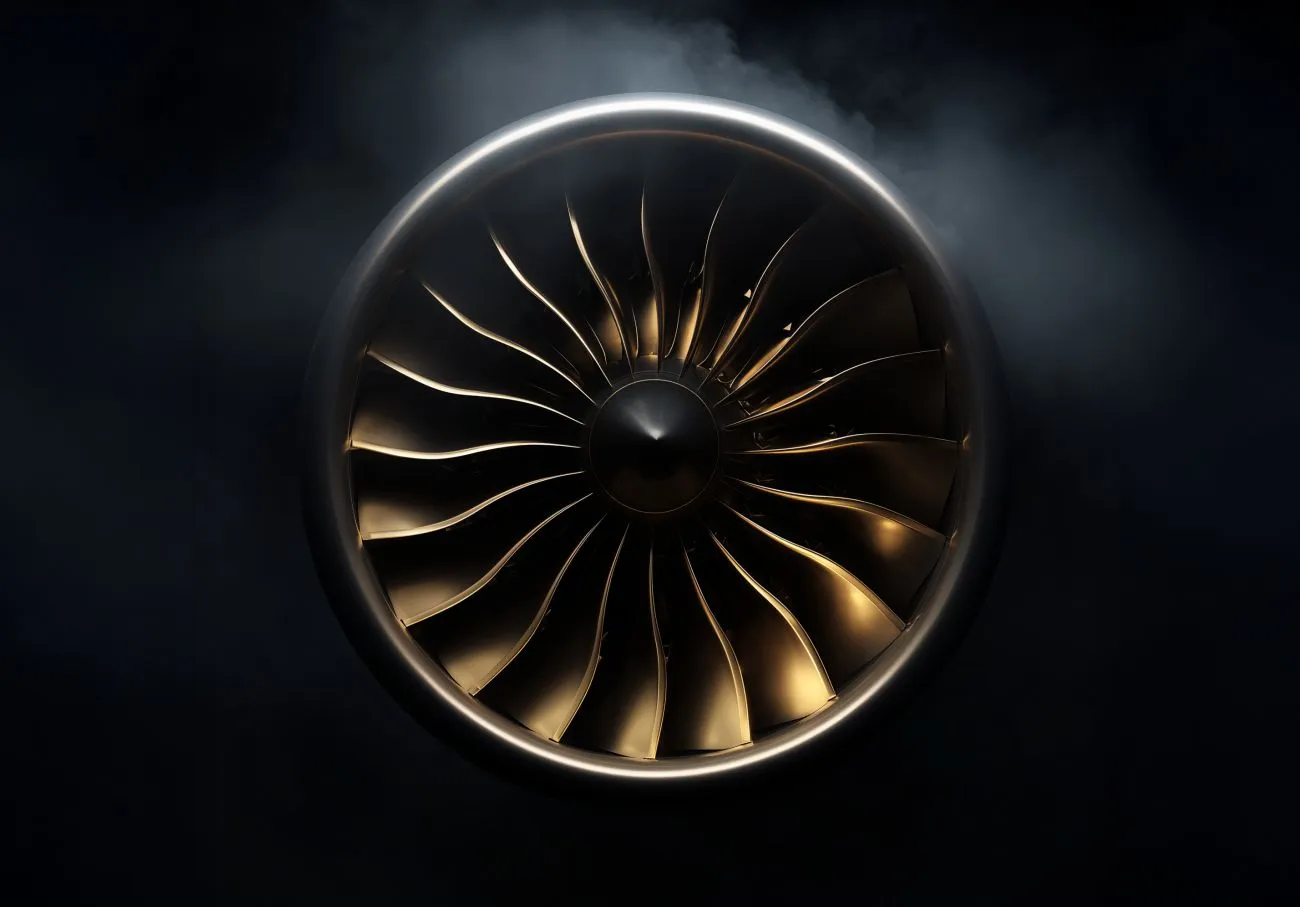
- Simulation of low-frequency vibrations induced by the free rotation of a turbine with a torn-off blade.
- Validation of the behaviour of equipment and components under extreme dynamic stress
Our windmilling testing services

Aerospace

Defence
The characteristics of windmilling tests
Our laboratories are equipped to carry out accurate and reliable tests.
- Frequency: 0.1 to 50 Hz.
- Applied force: up to 5,000 N.
- Maximum displacement: 350 mm peak to peak.
- Maximum acceleration: 30 gn.
- Maximum speed: 6.0 m/s.
- Payload: up to 50 kg.
- Horizontal table 500 x 500 mm.
Talk to our windmilling testing experts
Failure modes identified during testing
Windmilling tests can detect several types of failures:
- Structural deformation of engine components and other aircraft equipment.
- Appearance of cracks or breaks.
- Mechanical strength problems under prolonged vibration.
Benefit from the expertise and technical support of the Emitech Group
Our laboratories provide tailored support:
- Analysis and definition of test requirements.
- Execution of test campaigns under representative operating conditions.
- Interpretation of results and optimisation recommendations.
Needs
Discover a selection of additional resources that explore topics related to this page including regulatory contexts, technical articles, and specific areas of expertise. These materials provide further insight to help you better understand the key challenges and available solutions.

Contact us for a quote
Do you need to guarantee the safety and conformity of your motors in the face of extreme vibrations?Contact our experts for a tailored solution.
Request a personalised quote